Last month, Orlando became the epicenter of neuromuscular research as nearly 2,000 clinicians, researchers, and advocates gathered for the 2026 MDA Clinical & Scientific Conference. For A Foundation Building Strength (AFBS), this trip marked a major milestone: our first time attending as a formal patient advocacy organization.
Represented by Executive Director Jen Tozer, Founder Marc Guillet, and Scientific Director Gustavo Dziewczapolski, AFBS spent the week ensuring that Nemaline Myopathy (NM) remains at the forefront of global neuromuscular conversations.
A Seat at the Table: Advocacy and Policy
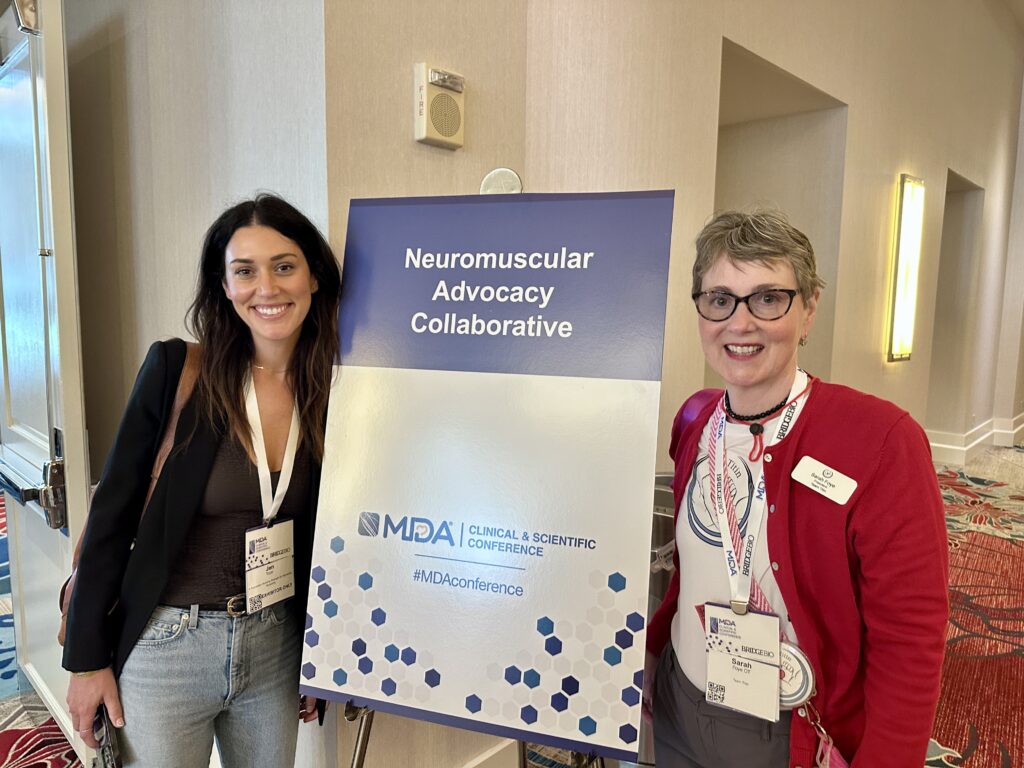
One of the most significant moments of the trip was AFBS joining the MDA Neuromuscular Advocacy Collaborative (NMAC), a coalition of patient organizations working together on public policy for the neuromuscular community. Priorities for this group include Medicaid defense, NIH funding support, air travel accessibility, and therapeutic development.
Our Executive Director, Jen Tozer, was excited to have the chance to collaborate with these organizations and add AFBS’s voice to the conversation: “This conference was an important milestone in establishing our place among larger neuromuscular organizations. We are committed to partnering on these efforts to create the broadest possible impact for our community.”
The Science: Precision and Preparation
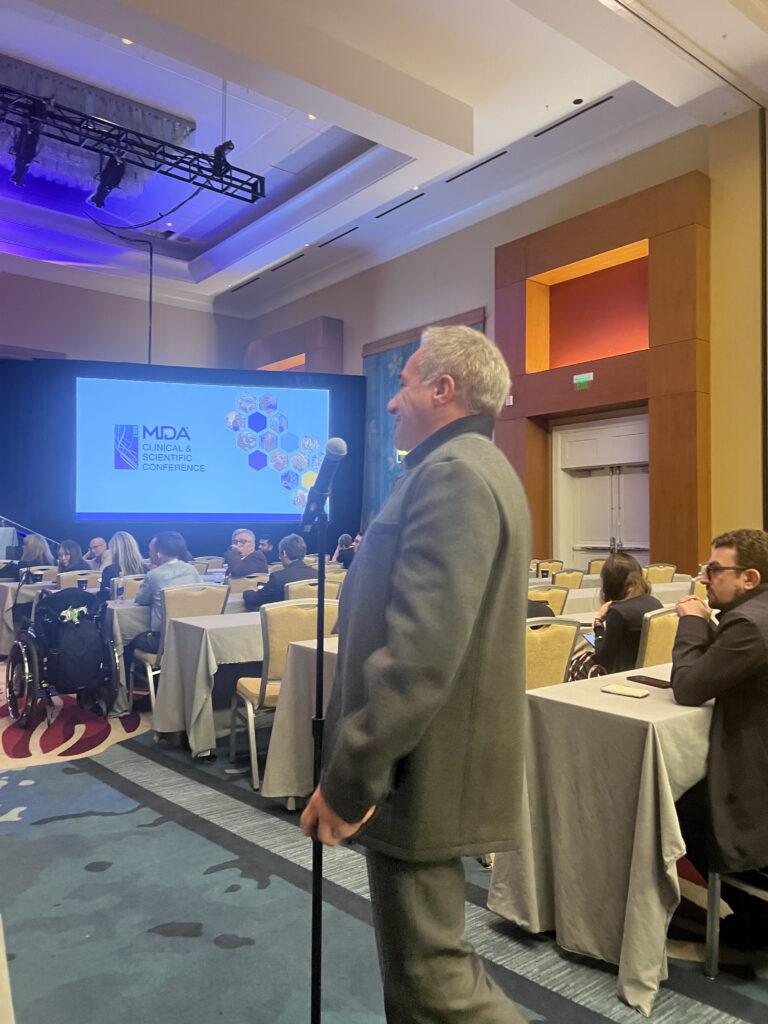
Our Scientific Director, Gustavo Dziewczapolski, immersed himself in over 500 scientific abstracts presented at the conference. The overarching theme of 2026? Precision.
As the field is improving the first generation of AAV vectors with more targeted, more secure and more efficient new generations of AAVs, is also moving toward a new class of delivery systems for gene therapy, including “fusogens” and lipid nanoparticles designed to carry more cargo capacity (large size genes like NEB) and target muscle tissue with accuracy while avoiding the liver to reduce toxicity. For the NM community, this reinforces our priority of funding proof-of-concept research for genetic medicines.
Beyond the “how” of delivery, the conference emphasized Clinical Trial Readiness. Researchers are increasingly looking toward quantitative MRI, ultrasound, and wearable devices to capture “real-world” function– tools that could detect the subtle changes traditional clinical tests might miss.
Global Connections: From Brazil to Boston
The “hallway tracks” and poster sessions proved just as vital as the formal presentations. We were thrilled to see the progress of the AFBS-funded Natural History Studies (NHS) being shared on a global stage.
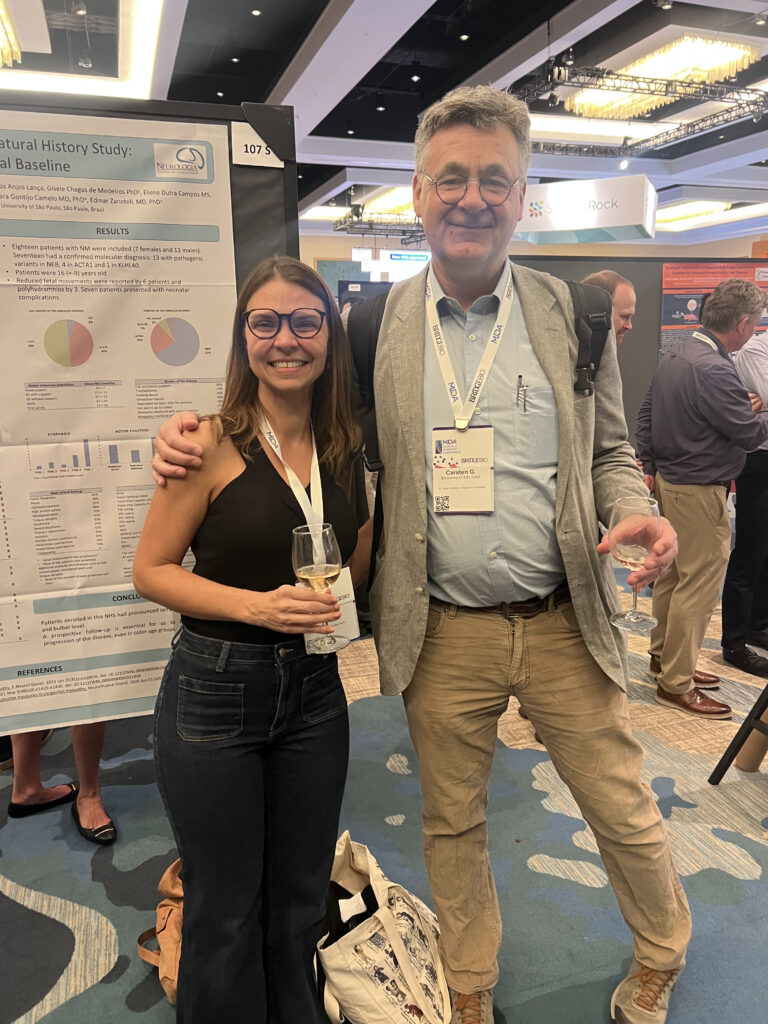
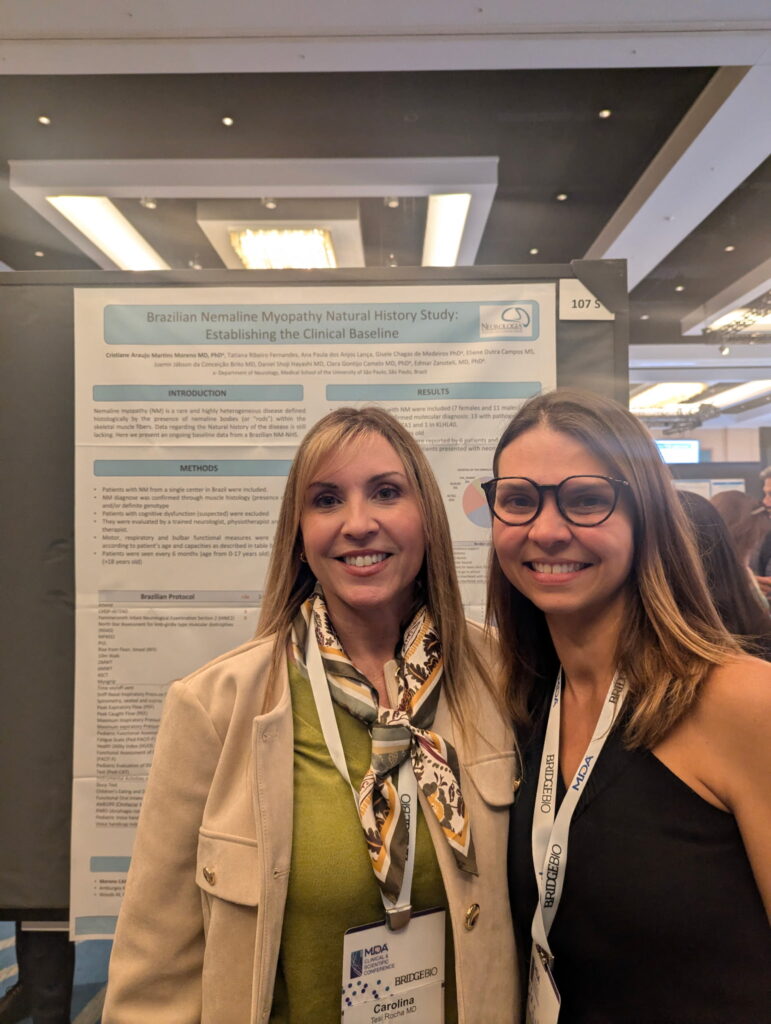
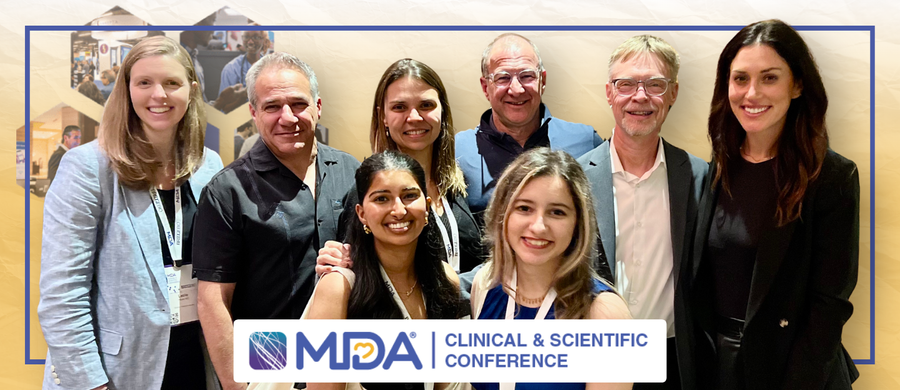
The MDA conference provided a rare opportunity to bring together the various “engines” of our research mission in one room.
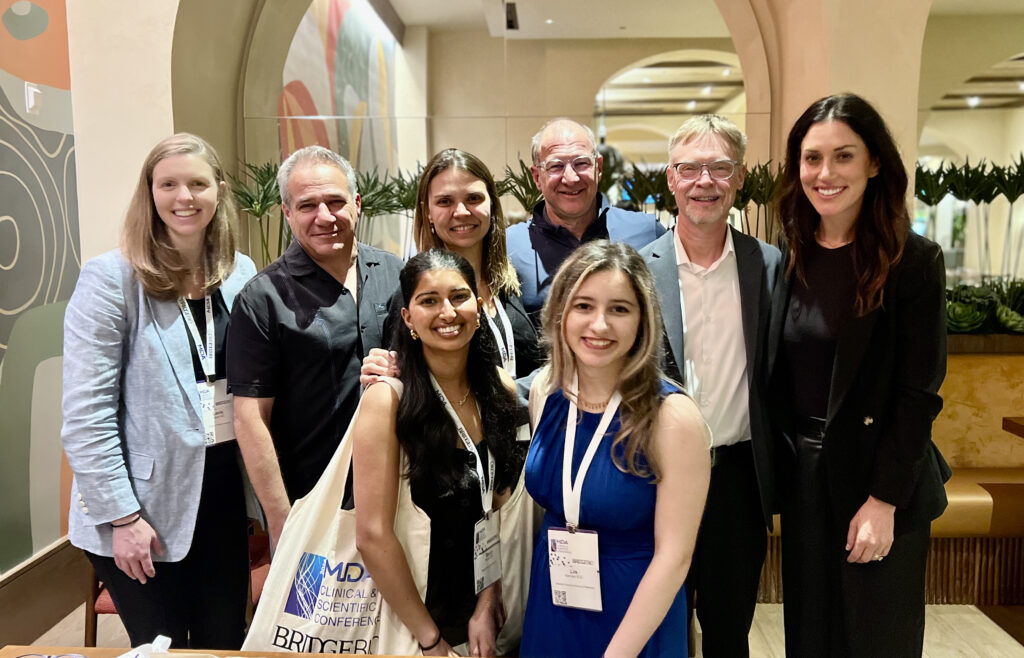
Caption: (Left to Right) Dr. Leslie Hayes, Gustavo Dziewczapolski, Dr. Cristiane Moreno, Marc Guillet, Dr. Alan Beggs, and Jen Tozer. Front: Sarah Ismail and the Stanford research team.
What This Means for the Nemaline Myopathy Community
Our team returned from Orlando energized and with a clear set of priorities. The insights gained will directly shape our next steps:
- Expanding our Registry: Ensuring diverse and representative participation to support research and trial feasibility.
- Refining Research Tools: Continuing to fund the creation of research tools and proof-of-concept studies.
- Educational Resources: Developing new materials to help families understand emerging therapeutic approaches like gene editing and RNA-based therapies.
Progress in rare disease is rarely a straight line, but the momentum we witnessed in Orlando was undeniable. AFBS is committed to ensuring the Nemaline Myopathy community isn’t just watching this progress…we’re leading it.
A Foundation Building Strength (AFBS) is a nonprofit organization dedicated to accelerating the development of treatments for Nemaline Myopathy. Our mission is to fund cutting-edge research to find effective treatments while providing resources and a strong community for families affected by NM. We are proud to be at the forefront of driving Nemaline Myopathy research breakthroughs forward through collaborations with research teams across the globe.
Donate to AFBS: Your monetary gift will support critical research and provide vital resources for NM families.
Stay Connected: Sign up for our email list to receive the latest updates from AFBS and learn more about NM research. Are you an individual or a caregiver of an individual affected by NM? Fill out the AFBS Contact Survey to be connected with valuable resources, support, and research opportunities! Visit our “Get Involved” page for even more ways to connect!