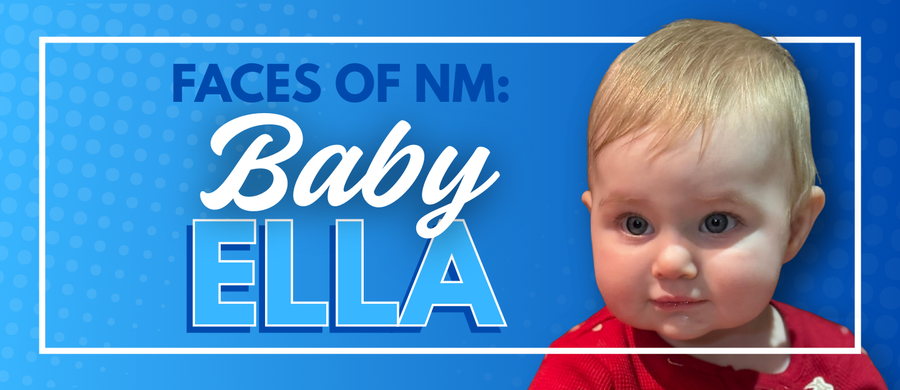
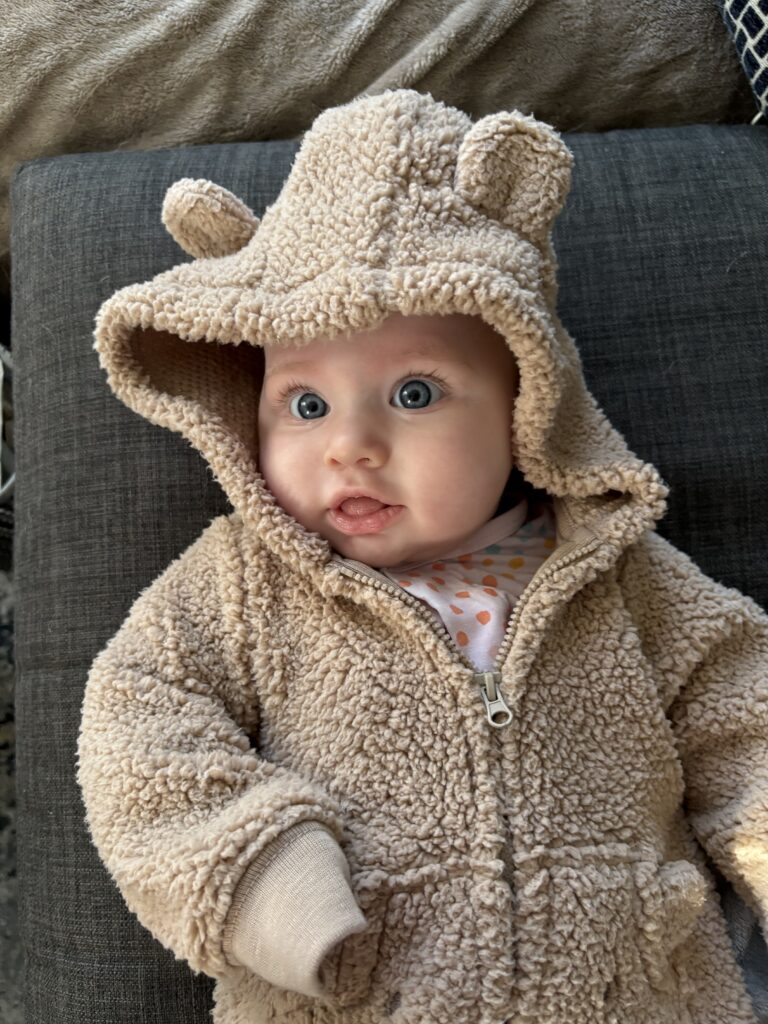
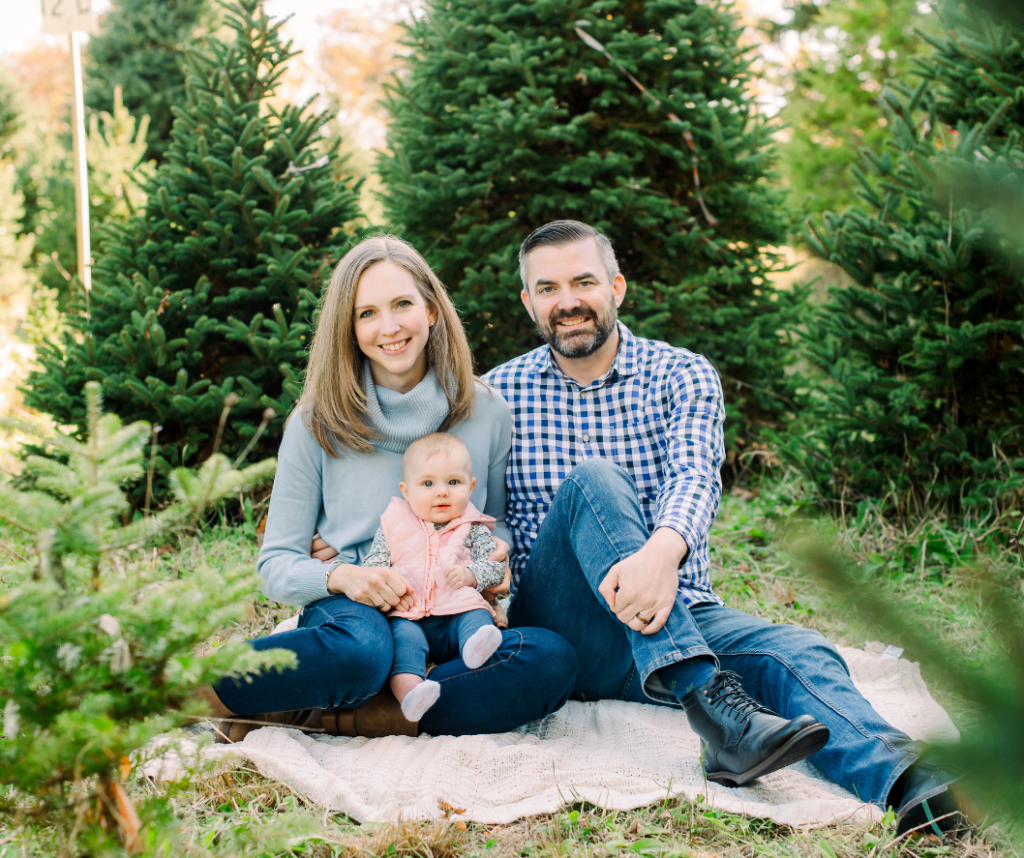
At nine months old, Ella is defined by two distinct realities. To her parents, Erin and Paul, she is a sharp, observant infant with bright blue eyes and a smile that anchors their world. She mimics adult behaviors and is already beginning to learn early sign language with her mother. To the medical world, however, Ella is a patient with ACTA1-related Nemaline Myopathy (NM), the rare neuromuscular condition that causes muscle weakness of varying severity.
The Path to Diagnosis
The first signs that Ella’s path would be different appeared shortly after her birth in May 2025. Ella struggled with feedings, faced persistent difficulties with swallowing and displayed a low muscle tone that led her parents through a months-long odyssey of specialists.
“Ella had feeding difficulties soon after birth as well as low muscle tone,” Erin explains. “After months of working with a feeding team and meeting with various specialists, we were referred to a neurologist who suggested a muscle biopsy.”
That biopsy revealed the presence of “rods” within the muscle fibers, a hallmark of NM. A subsequent genetic test confirmed the ACTA1-related Nemaline Myopathy mutation. For her parents, the clinical confirmation brought with it a heavy sense of the unknown. “Our greatest concern,” Erin says, “was the uncertainty of what was ahead and what challenges Ella would face.”
Navigating a Complex Daily Reality
Today, Ella’s home in many ways resembles a specialized care facility. Because NM affects the muscles used for swallowing, Ella receives her nutrition through a G-tube. Her epiglottis (the flap responsible for protecting the airway) is weak, meaning that even routine reflux or secretions can become dangerous.
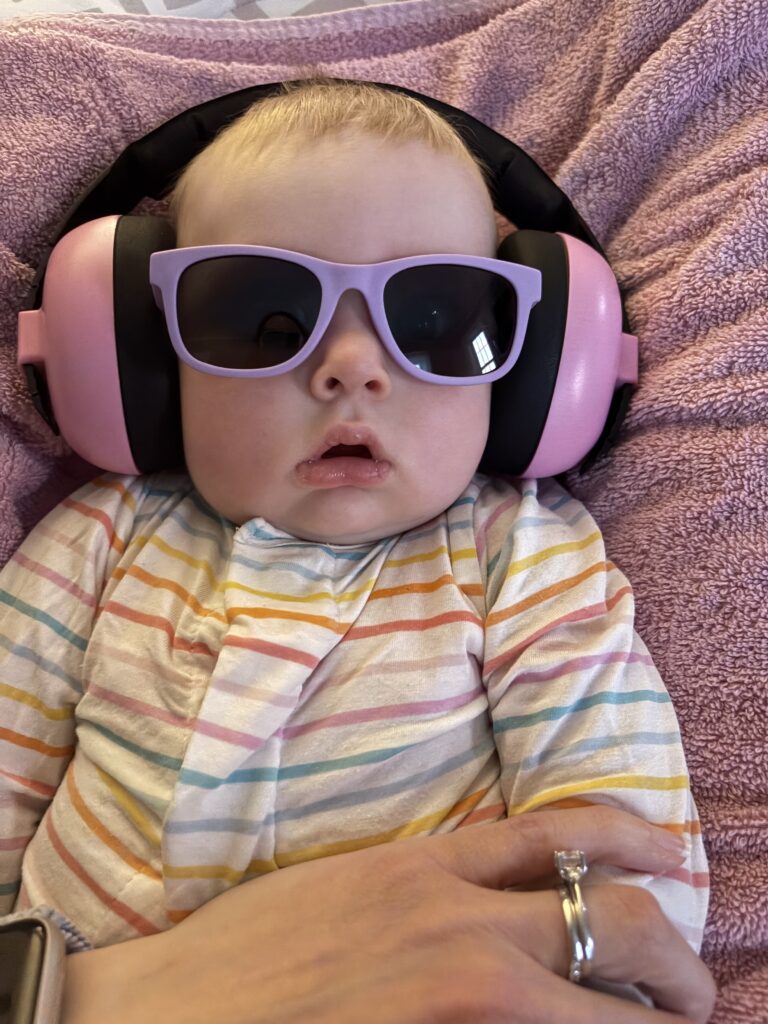
To manage this, Erin and Paul utilize a suite of hospital-grade equipment, including a cough assist machine, a nebulizer, and a suction machine. “Ella receives a number of weekly therapies, including physical and occupational therapies, which we also do with her at home,” Erin says. “Managing and coordinating care amongst all the different specialties can be challenging at times, particularly when some providers are not as familiar with NM…It can still feel overwhelming.”
A Commitment to Research
When the diagnosis first arrived, Erin and Paul found their footing by connecting with other families through A Foundation Building Strength (AFBS). “Talking with others who had been in our shoes made all the difference,” Erin says. “Additionally, AFBS’s dedication to research gave us hope for the future and the possibility of life-changing treatments.”
As scientists themselves, the couple turned their focus toward the underlying mechanics of the disease. They were particularly moved by AFBS’s commitment to transparency, specifically that 100% of donations go directly to research. Last year, the Werths raised over $100,000 for ACTA1-related Nemaline Myopathy research with their family and friends, a milestone that reflects both their personal dedication and the urgency of the cause.
Looking Toward the Future
Despite the complexity of her medical needs, Ella’s personality remains the central focus of her family’s life. “She is a bright, smiley, and incredibly curious little lady,” Erin says. “We are so privileged to be her parents and can’t wait to watch her grow.”
Ella’s story is a single thread in the larger tapestry of the NM community. While every family’s experience with the disorder is unique, encompassing a wide spectrum of severity and symptoms, they are bound by the same goal. By funding groundbreaking research and fostering a global network of support, families like Ella’s are working to ensure that individuals affected by Nemaline Myopathy can navigate the world to their fullest potential.
A Foundation Building Strength (AFBS) is a nonprofit organization dedicated to accelerating the development of treatments for Nemaline Myopathy. Our mission is to fund cutting-edge research to find effective treatments while providing resources and a strong community for families affected by NM. We are proud to be at the forefront of driving Nemaline Myopathy research breakthroughs forward through collaborations with research teams across the globe.
Donate to AFBS: Your monetary gift will support critical research and provide vital resources for NM families.
Stay Connected: Sign up for our email list to receive the latest updates from AFBS and learn more about NM research. Are you an individual or a caregiver of an individual affected by NM? Fill out the AFBS Contact Survey to be connected with valuable resources, support, and research opportunities! Visit our “Get Involved” page for even more ways to connect!